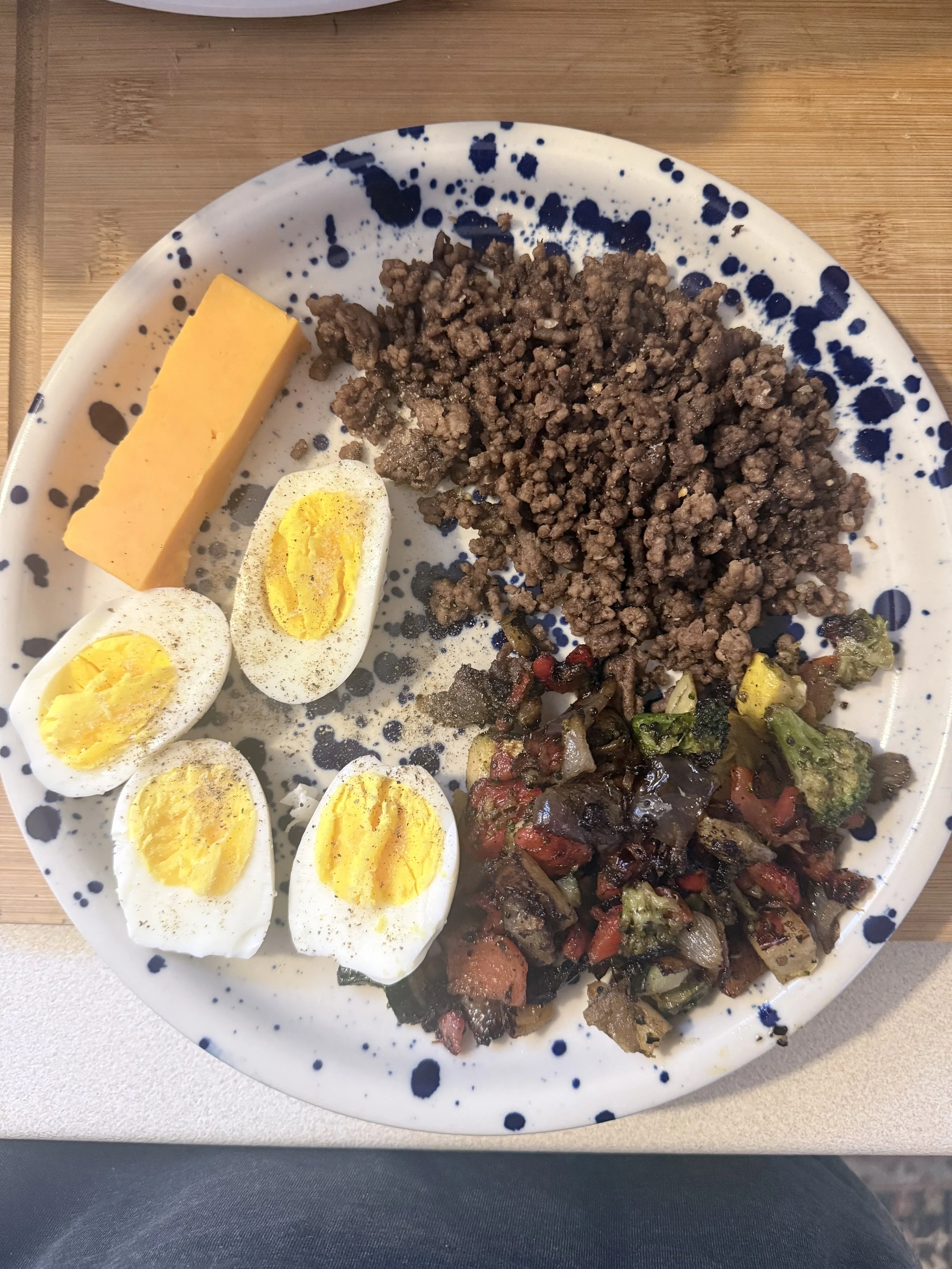
Keto! Why I started.
Why I’m Choosing Keto in My Brain Cancer Journey.
This is something I’ve gone back and forth on sharing, because I want to be really clear about my heart behind it.
I’m not doing keto because I think it’s a cure.
I’m not doing it because I’ve found some secret no one else knows about.
I’m doing it because it makes sense to me — both biologically and personally — as a way to support my body through this.
⸻
Understanding the “Why”
One of the things I’ve been learning is that brain tumors, especially aggressive ones like glioblastoma, are closely tied to how they use energy.
Our bodies normally run on glucose (sugar). That’s the primary fuel source.
But many cancer cells — including brain tumors — rely heavily on glucose in a way that’s different from healthy cells. This concept has been studied for a long time and is often referred to as altered cancer metabolism.
That doesn’t mean sugar causes cancer.
And it doesn’t mean eliminating sugar will cure it.
But it does mean this:
How cancer cells use fuel is not the same as how healthy cells do.
So for me, keto is a way of asking:
What happens if I shift my body away from relying primarily on glucose, and toward using ketones instead?
⸻
Ketones and the Brain
This part really stood out to me.
Your brain can run on ketones.
When your body is in ketosis, it produces ketones as an alternative fuel source — and your brain can use them efficiently. Some research even suggests ketones may support brain energy metabolism, reduce oxidative stress, and promote more stable energy production.
That matters to me.
Because if my brain is going through something as intense as cancer and treatment, I want to support it as best as I can — not just medically, but metabolically.
So part of this decision is simple:
I want to give my brain another option for fuel.
⸻
What the Research Actually Says (and Doesn’t Say)
I want to be really honest here, because this matters.
Keto is not a proven treatment for brain cancer.
But it is being studied.
There are ongoing and completed studies looking at ketogenic diets alongside standard treatments like chemotherapy and radiation — especially in glioblastoma. So far, research has shown that ketogenic diets are generally safe and feasible for patients, but we still don’t have strong evidence that they improve outcomes.
And I’m okay with that tension.
Because for me, this isn’t about replacing treatment — it’s about supporting my body alongside it.
Not either/or — but both.
⸻
The Liver + Immunotherapy Piece
Another layer for me is looking ahead.
I’ll be starting immunotherapy, and one of the known risks can be stress on the liver.
So I started asking:
How can I support my body before I even begin?
There’s research showing that ketogenic diets can help improve metabolic health and reduce liver fat in certain populations, especially those dealing with insulin resistance or fatty liver.
Now — to be clear — keto is not proven to prevent liver issues from immunotherapy.
But improving metabolic health and supporting liver function overall felt like a wise and proactive step for me.
⸻
This Isn’t About Control — It’s About Intention
If I’m being honest, there’s a part of this journey that feels completely out of my hands.
And I’ve had to learn how to sit in that.
But this?
This is something I can do.
Not out of fear.
Not out of desperation.
But out of intention.
To support my body.
To steward my health the best way I know how.
To partner with the treatment I’m receiving — not replace it.
I truly believe my body is a temple — and even in the middle of something I didn’t choose, I still have a responsibility in how I care for it.
So in the simplest way I can say it:
I’m just trying to do my part.
⸻
Where I Land
So this is where I’ve landed:
I’m choosing keto because:
• Brain tumors are closely tied to metabolism
• Ketones can serve as an alternative fuel for the brain
• There’s emerging (but still developing) research in glioblastoma
• It may support overall metabolic and liver health going into treatment
And ultimately…
It aligns with how I want to walk this journey — informed, intentional, and hopeful.
With faith at the center of it.
⸻
If you’re reading this and you’re on your own health journey, I’m not here to tell you what you should or shouldn’t do.
I’m just sharing what I’m doing — and why.
And as always… I’m learning as I go 🤍
⸻
References & Further Reading
If you’re someone who likes to look into the research yourself, here are a few places to start:
• National Cancer Institute – Nutrition in Cancer Care
https://www.cancer.gov/about-cancer/treatment/side-effects/appetite-loss/nutrition-hp-pdq
• Review on ketogenic metabolism and brain health
https://pubmed.ncbi.nlm.nih.gov/38033541/
• Overview of cancer metabolism
https://www.ncbi.nlm.nih.gov/books/NBK573693/
• Systematic review on ketogenic diets and liver health
https://pubmed.ncbi.nlm.nih.gov/41206623/
• Research on liver considerations in immunotherapy